























Schwarze Aprikose (Prunus x dasycarpa): Eine seltene Kreuzung und ihre Geheimnisse
Das Geheimnis der Schwarzen Aprikose
Ein Naturalchimist zwischen zwei Obstwelten
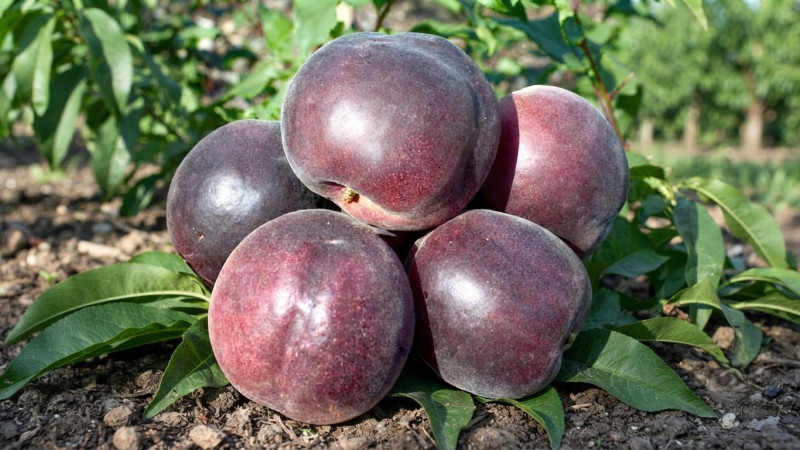
Die Natur ist der beste Züchter überhaupt, und hin und wieder schafft sie in ihrem gewaltigen Labor ein Werk, das Wissenschaftler und Obstgärtner seit Jahrhunderten in Erstaunen versetzt. Stellen Sie sich eine Frucht vor, die auf den ersten Blick an eine dunkle, purpurne Pflaume erinnert, beim Berühren jedoch mit einem zarten samtigen Flaum überrascht und beim Hineinbeißen einen unverwechselbaren süßsäuerlichen Geschmack mit typischem Aprikosenaroma entfaltet. Genau eine solche botanische Rarität ist die Schwarze Aprikose – Prunus x dasycarpa. Diese seltene Artkreuzung vereint das Beste zweier unterschiedlicher Obstarten in sich und ist nicht nur eine kulinarische Besonderheit, sondern vor allem ein unschätzbarer genetischer Schatz für die Zukunft des Obstbaus.
Die Schwarze Aprikose (Prunus x dasycarpa Ehrh.) ist eine spontane Artkreuzung aus der gewöhnlichen Aprikose (Prunus armeniaca L.) und der Myrobalane, auch Kirschpflaume genannt (Prunus cerasifera Ehrh.). Erstmals wissenschaftlich beschrieben wurde sie 1791 von Jakob Friedrich Ehrhart. Heute wird sie ausschließlich durch Veredelung erhalten und vermehrt – wildwachsende Populationen dieser Art sind nicht bekannt.
|
2n = 16
Chromosomenzahl
|
2,5–4 m
Baumhöhe
|
25–40 g
Fruchtgewicht
|
38 %
Pollenfertilität
|
← Tabelle seitlich wischen →
Herkunft und taxonomische Einordnung: Ein Kind des Zufalls
In der Fachliteratur findet man für die Schwarze Aprikose auch mehrere Synonyme, etwa Armeniaca atropurpurea Loisel., Armeniaca dasycarpa (Ehrh.) Borkh., Armeniaca fusca Turpin & Poit. oder Prunus nigra Desf. (Zaurov et al., 2013). Ihre Übergangsmerkmale zwischen Pflaume und Aprikose wurden später ausführlich von Duhamel im Jahr 1812 beschrieben (Akopian et al., 2024).
Die bedeutende russische Pomologin Kostina (1936) vermutete, dass diese Kreuzung unabhängig voneinander an mehreren Orten entstanden sein könnte – im westlichen China, in Zentralasien, im Iran sowie in Teilen Vorderasiens. Zu dieser spontanen Kreuzung dürfte der gemeinsame Anbau beider Elternarten in diesen Regionen sowie ihre überlappenden Blühphasen beigetragen haben (Akopian et al., 2024).
Interessant ist, dass die Schwarze Aprikose ausschließlich aus Kulturpflanzungen bekannt ist. Es gibt keinerlei Belege für wildwachsende oder verwilderte Populationen dieser Art. Heute findet man sie in Zentralasien, im indischen Bundesstaat Jammu und Kashmir, in der pakistanischen Provinz Belutschistan, in der chinesischen Provinz Xinjiang sowie in Armenien und Teilen Osteuropas (Zaurov et al., 2013; Akopian et al., 2024).
Botanische Merkmale: Ein perfekter Kompromiss
Sowohl die morphologischen als auch die biologischen Eigenschaften der Schwarzen Aprikose stellen einen Übergang zwischen ihren beiden Elternarten dar. Eine ausführliche phänotypische Beschreibung der Art liefert eine Studie der traditionellen armenischen Sorte 'Shlor-Tsiran' (wörtlich „Pflaumen-Aprikose"), die zu den am besten dokumentierten Formen dieser seltenen Kreuzung zählt (Akopian et al., 2024).
Unterscheidungsmerkmale im Vergleich zu den Elternarten
| Merkmal | Gewöhnliche Aprikose | Schwarze Aprikose | Myrobalane |
|---|---|---|---|
| Farbe der Kelchblätter | rötlich | rötlich | grün |
| Länge des Blütenstiels | 1–2,5 mm | 7–12 mm | länger als bei der Aprikose |
| Behaarung der Frucht | ausgeprägt | fein, samtig | kahl, unbehaart |
← Tabelle seitlich wischen →
Fortpflanzungsbiologie und Genetik: Der Preis der Hybridisierung
Genetisch betrachtet ist Prunus x dasycarpa eine diploide Art mit einer somatischen Chromosomenzahl von 2n = 16 (Das et al., 2011; Soldatov & Salaš, 2007). Wie bei Artkreuzungen üblich, fordert die Vereinigung zweier unterschiedlicher Genome ihren Tribut bei der Fortpflanzung – Pollenuntersuchungen der Sorte 'Shlor-Tsiran' ergaben eine sehr geringe Fertilität und eine extrem niedrige Keimfähigkeit der Pollenkörner, was auf meiotische Anomalien während der Mikrosporogenese zurückzuführen ist, wie sie für entfernte Kreuzungen innerhalb der Familie der Rosengewächse (Rosaceae) typisch sind (Akopian et al., 2024).
| Schwarze Aprikose – Pollenfertilität | 38 % |
| Elternarten – Pollenfertilität | 80–92 % |
| Schwarze Aprikose – Pollenkeimfähigkeit | 3,4 % |
| Elternarten – Pollenlebensfähigkeit | 80–92 % |
Die Werte beziehen sich auf eine Skala von 0–100 %; bei den Elternarten (gewöhnliche Aprikose, Myrobalane) wird der Mittelwert der angegebenen Spanne von 80–92 % dargestellt.
← Seitlich wischen →
Trotz dieser Fortpflanzungshindernisse besitzt die Schwarze Aprikose ein enormes züchterisches Potenzial. Untersuchungen haben gezeigt, dass die Art in der Lage ist, unreduzierte diploide Gameten zu bilden. Dadurch konnte die Schwarze Aprikose erfolgreich mit der hexaploiden Pflaume (P. domestica ssp. domestica L., 2n = 48) gekreuzt werden, wodurch wertvolle tetraploide Hybriden entstanden – etwa die ertragreiche, großfruchtige Sorte 'Jibeck' –, die die Eigenschaften beider Arten vereinen (Soldatov & Salaš, 2007).
Der Name der traditionellen armenischen Sorte 'Shlor-Tsiran' bedeutet wörtlich übersetzt „Pflaumen-Aprikose" – eine treffende Bezeichnung für eine Frucht, die tatsächlich das Erbe zweier verschiedener Arten in sich vereint.
Ökologische Widerstandsfähigkeit: Ein Baum für raue Bedingungen
Was der Schwarzen Aprikose an Fruchtgröße fehlt, macht sie durch ihre außergewöhnliche Vitalität und Widerstandsfähigkeit wieder wett. Dank der von der Myrobalane geerbten Gene besitzt sie eine hohe Toleranz gegenüber biotischen wie abiotischen Stressfaktoren.
Phänologisch zeichnet sie sich durch einen späteren Blühbeginn (Ende März bis Anfang April) und eine spätere Fruchtreife (Juli) aus. Dank ihrer längeren Winterruhe und ihrer späteren Blüte kann sie späten Frühjahrsfrösten wesentlich besser entgehen als gewöhnliche Aprikosen, was für regelmäßigere Erträge sorgt (Eremin et al., 2021; Akopian et al., 2024). Laborversuche mit künstlicher Frosteinwirkung bestätigten, dass die generativen Organe der Schwarzen Aprikose eine deutlich höhere Frosthärte aufweisen – nicht nur im Winter, sondern besonders im zeitigen Frühjahr nach kurzen Wärmeperioden (Eremin et al., 2021).
Darüber hinaus zeigt die Schwarze Aprikose eine hervorragende Widerstandsfähigkeit gegenüber Pilzkrankheiten, die Steinobst häufig stark schädigen. Sie ist hochresistent gegen die Fruchtfäule (Monilia fructigena) sowie gegen die Schrotschusskrankheit (Clasterosporium carpophilum) (Akopian et al., 2024; Soldatov & Salaš, 2007). Diese Eigenschaften machen sie nicht nur zu einem idealen Baum für extensive Hausgärten, sondern auch zu einer wertvollen Genquelle für die Züchtung neuer, anpassungsfähiger Sorten und klonaler Unterlagen (Eremin et al., 2021).
Fazit
Die Schwarze Aprikose (Prunus x dasycarpa) ist der lebende Beweis dafür, wie die Natur zwei unterschiedliche Arten zu einem harmonischen, wenn auch fortpflanzungstechnisch komplizierten Ganzen vereinen kann. Mit ihrer dunklen, samtigen Schale, ihrem unverwechselbaren Geschmack und vor allem ihrer außergewöhnlichen Frost- und Krankheitsresistenz bildet sie eine Brücke zwischen der Vergangenheit des traditionellen Obstbaus und der Zukunft der modernen Züchtung.
Hinweis: Alte Landsorten dieser Art, wie die armenische 'Shlor-Tsiran', verschwinden heute zunehmend aus der Landschaft und werden durch kommerziell attraktivere, aber oft empfindlichere Sorten ersetzt (Akopian et al., 2024). In einer Zeit, in der der Klimawandel zunehmend unberechenbare Wetterschwankungen mit sich bringt und späte Frühjahrsfröste die Ernten gewöhnlicher Aprikosen vernichten, ist die Erhaltung und tiefergehende Erforschung des Genpools der Schwarzen Aprikose wichtiger denn je.
Dieser „Naturalchimist" birgt in sich vielleicht den Schlüssel zu widerstandsfähigen und gesunden Obstgärten unserer Zukunft.
Seltene Steinobstsorten für Ihren GartenSie suchen widerstandsfähige und ungewöhnliche Sorten von Aprikosen, Pflaumen und ihren Kreuzungen? In unserem Onlineshop finden Sie sorgfältig ausgewählte Bäume, die auch unberechenbarem Wetter standhalten. Zum Onlineshop |
Begleiten Sie uns auf FacebookTauschen Sie sich über Ihre Anbauerfahrungen aus, stellen Sie Fragen zu Sorten und teilen Sie Ihre Ernte mit einer Gemeinschaft begeisterter Obstgärtner – diskutieren Sie mit Experten und erhalten Sie neue Artikel als Erste. Zu unserer Seite |
← Tabelle seitlich wischen →