























Phytochemie der Mandel: Polyphenole in der Haut und Synergie mit Vitamin E

Der braune Gesundheitsschild
Das Geheimnis der Polyphenole in der Mandelhaut und ihre perfekte Synergie mit Vitaminen
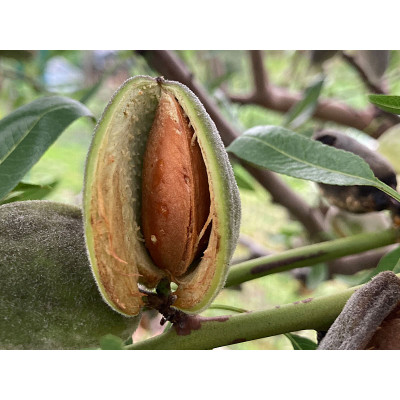
Wenn wir eine ungeschälte Mandel in der Hand halten, gleitet unser Blick meist achtlos über ihre raue, braune Haut hinweg. Für viele ist sie nur eine bittere Hülle, die vor dem Backen oder Kochen durch Blanchieren entfernt wird. Aus phytochemischer Sicht ist diese dünne, lederartige Schicht jedoch Schauplatz eines regelrechten chemischen Kampfes – und zugleich die wertvollste Apotheke, die die Mandel zu bieten hat. Während das weiße Innere des Kerns als Energiespeicher in Form von Fetten und Eiweiß dient, ist die braune Haut ein hochentwickelter biochemischer Schutzschild. Sie enthält Hunderte bioaktiver Stoffe, die die Pflanze vor UV-Strahlung, Bakterien und Pilzen schützen – und wenn Sie sie verzehren, werden diese auch zu Ihrem eigenen Abwehrsystem.
Phytochemie der Mandel: mehr als nur Grundnährstoffe
Neben Makro- und Mikronährstoffen sind Mandeln eine außergewöhnlich reiche Quelle an Phytochemikalien – sekundären Pflanzenstoffen, die keine Kalorien liefern, aber eine starke biologische Wirkung zeigen. Wissenschaftliche Analysen haben in Mandeln bisher rund 130 verschiedene polyphenolische Verbindungen identifiziert (Bolling, 2017).
| Bioaktiver Stoff | Gehalt pro 100 g |
|---|---|
| Proanthocyanidine | 162 mg |
| Hydrolysierbare Tannine | 82,1 mg |
| Flavonoide | 61,2 mg |
| Phenolsäuren und Aldehyde | 5,5 mg |
← Tabelle seitlich wischen →
Quelle: Bolling, 2017
Die braune Haut: das konzentrierte Labor der Natur
Die wichtigste Erkenntnis der Mandelforschung ist, dass die Verteilung der Phytochemikalien im Samen extrem asymmetrisch ist. Obwohl die braune Haut nur 4–8 % des Gesamtgewichts des Kerns ausmacht, ist sie das absolute Zentrum der bioaktiven Stoffe (Moronfolu et al., 2025; Silva et al., 2025). Studien zeigen, dass mehr als 60 % des gesamten Phenolgehalts und erstaunliche 95 % aller Flavonoide der Mandel in genau dieser dünnen Oberflächenschicht konzentriert sind (Silva et al., 2025; Massantini & Frangipane, 2022). Acht der neunzehn identifizierten Flavonoide kommen ausschließlich in der Haut vor (Massantini & Frangipane, 2022).
| Anteil am Kerngewicht | 8 % |
| Anteil am gesamten Flavonoidgehalt | 95 % |
← Seitlich wischen →
Der erste Wert zeigt den Anteil der Haut am Gesamtgewicht des Kerns, der zweite ihren Anteil am gesamten Flavonoidgehalt der Mandel.
|
130
identifizierte
Polyphenole |
60 %+
der Phenole
in der Haut |
95 %
der Flavonoide
in der Haut |
8/19
Flavonoide nur
in der Haut |
← Tabelle seitlich wischen →
Polyphenole und Flavonoide in der Haut wirken als Phytoalexine – ein natürlicher Abwehrmechanismus, der den Samen vor Umweltstress, Oxidation, UV-Strahlung und dem Befall durch pathogene Bakterien oder Pilze schützt. (Massantini & Frangipane, 2022; Silva et al., 2025)
Die Hauptakteure: das Profil der Polyphenole und Flavonoide
Das chemische Profil der Mandelhaut ist außerordentlich komplex. Zu den wichtigsten Gruppen und Verbindungen zählen:
Der Synergieeffekt: wenn 1 + 1 = 3 ergibt
Für sich allein sind die Polyphenole der Mandelhaut bereits starke Antioxidantien, die freie Radikale neutralisieren, Metallionen binden und oxidativen Stress verringern können (Esfahlan et al., 2010; Silva et al., 2025). Das eigentliche therapeutische Potenzial der Mandel liegt jedoch in einem Phänomen, das als Synergie bezeichnet wird.
Der Mandelkern ist von Natur aus eine der reichsten Quellen für das fettlösliche Vitamin E (Alpha-Tocopherol). Wenn Sie eine ganze, ungeschälte Mandel verzehren, werden die Polyphenole und Flavonoide aus der Haut im Verdauungstrakt freigesetzt und gelangen gemeinsam mit dem Vitamin E aus dem Kern in Ihren Blutkreislauf.
Der Einfluss der Verarbeitung: warum Blanchieren ein Verlust ist
Das Rösten ganzer Mandeln mit Haut hat dagegen eine komplexere Wirkung. Zwar können dabei manche hitzeempfindlichen Polyphenole teilweise abgebaut werden, doch das Rösten zerstört gleichzeitig Zellwände, wodurch die Extrahierbarkeit anderer phenolischer Verbindungen steigt. Zudem entstehen beim Rösten durch die Maillard-Reaktion neue antioxidative Verbindungen, die die gesamte antioxidative Kapazität der Mandel sogar erhöhen können (Silva et al., 2025; Massantini & Frangipane, 2022).
Wie Sie Ihre Polyphenolaufnahme maximieren
|
|
Ganze, ungeschälte, rohe Mandeln – der maximale Gehalt an Flavonoiden und Phenolsäuren bleibt erhalten. |
|
|
Geröstete Mandeln mit Haut – die Maillard-Reaktion kann die antioxidative Kapazität sogar weiter erhöhen. |
|
|
Blanchierte (geschälte) Mandeln – deutlicher Verlust an Flavonoiden und Phenolsäuren, die Mandel verliert ihren natürlichen Schutzschild. |
Fazit
Die Phytochemie der Mandel zeigt uns, dass die Natur ihre wertvollsten Nährstoffe nicht zufällig verteilt. Die braune Haut der Mandel ist kein Abfallprodukt, sondern ein hochentwickelter chemischer Schutzschild, der mehr als 130 bioaktive Polyphenole und Flavonoide enthält. Diese Stoffe – allen voran Isorhamnetin und Catechin – wirken nicht isoliert: Ihre wahre Stärke entfaltet sich erst in perfekter Synergie mit dem Vitamin E im Kern. Wenn Sie das nächste Mal zu Mandeln greifen, greifen Sie am besten zu ganzen, ungeschälten Mandeln – so aktivieren Sie in Ihrem Körper eine komplexe natürliche Apotheke, deren Rezeptur die Evolution über Millionen Jahre verfeinert hat.