























Waldfrüchte-Konfitüre kochen und Anthocyane bewahren
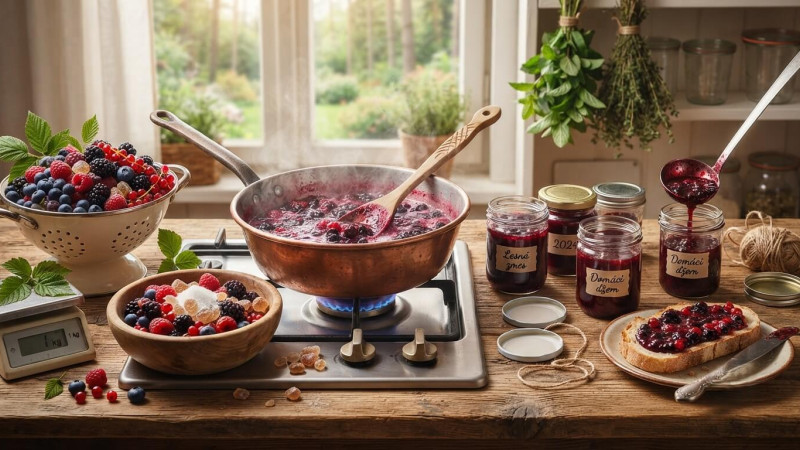
Alchemie im Kochtopf
Wie Sie die perfekte Waldfrüchte-Konfitüre kochen und dabei die „violetten Farbstoffe der Jugend“ retten
Eine blubbernde, tiefrote Konfitüre aus Walderdbeeren, eine dickflüssige Brombeermarmelade oder ein würziger Johannisbeer-Aufstrich – für viele von uns ist das Einkochen von Marmelade ein heiliges Sommerritual, mit dem wir den Geschmack und Duft des Sommers für die langen Wintermonate bewahren möchten. Betrachten wir diesen Vorgang jedoch aus Sicht der Lebensmittelchemie, erkennen wir, dass in unseren Töpfen ein erbitterter Überlebenskampf stattfindet.
Die Hauptakteure dieses Kampfes sind die Anthocyane – wertvolle violette, blaue und rote Pigmente, die Wissenschaftler wegen ihrer außergewöhnlichen antioxidativen Eigenschaften als „Farbstoffe der Jugend“ bezeichnen. Während manche Stoffe, etwa die Carotinoide in Aprikosen, vom Kochen sogar profitieren, hassen Anthocyane in Waldfrüchten Hitze regelrecht. Bedeutet das, dass hausgemachte Heidelbeermarmelade ernährungsphysiologisch wertlos ist? Keineswegs. Die Wissenschaft bietet uns präzise Methoden, um diese violette Kraft im Topf zu schützen.
Was sind Anthocyane? Wasserlösliche Pigmente, die den Stolz der Beerenfrüchte ausmachen – von Heidelbeeren, Brombeeren, Himbeeren, Erdbeeren, schwarzen und roten Johannisbeeren, Sauerkirschen bis hin zu dunklen Trauben. Sie wirken als außerordentlich starke Antioxidantien, die freie Radikale neutralisieren, die DNA schützen, die Gesundheit des Herz-Kreislauf-Systems unterstützen, das Gehirn vor neurodegenerativen Veränderungen schützen und starke entzündungshemmende Wirkungen zeigen (Muzamail et al., 2025; Anih et al., 2025).
Das Problem ist jedoch ihre chemische Stabilität. Anthocyane reagieren extrem empfindlich auf Hitze, Sauerstoffzufuhr und pH-Wert-Veränderungen (Nayak et al., 2015). Wie kocht man also Konfitüre, ohne sie zu verlieren?
Was im Topf geschieht: die Anatomie des Verlusts
Bei der traditionellen Herstellung von Konfitüren und Marmeladen wird das Obst über längere Zeit hohen Temperaturen ausgesetzt – beim Einkochen des Wassers oft über 100 °C. Für Anthocyane ist das eine kritische Situation, die sie gleich von drei Seiten angreift.
Achtung vor dem häufigsten Fehler: Lassen Sie zerdrücktes oder püriertes Obst niemals lange an der Luft stehen, bevor Sie es kochen. Das Enzym PPO arbeitet ununterbrochen, und mit jeder Stunde Wartezeit gehen weitere wertvolle Anthocyane verloren.
|
21–89 %
Anthocyanverlust bei langem Kochen
|
3–5 Min.
Kochzeit mit Pektin statt stundenlangem Einkochen
|
< 15 °C
empfohlene Lagertemperatur, dunkel gelagert
|
← Tabelle seitlich wischen →
Das Wissenschaftshandbuch: So retten Sie die violette Kraft in Ihrer Konfitüre
Trotz dieser Gefahren ist der Kampf nicht verloren. Wenden wir beim Kochen von Konfitüre Erkenntnisse der Lebensmittelchemie an, lassen sich die Anthocyanverluste deutlich verringern.
Bringen Sie etwas Wissenschaft in den traditionellen Konfitüre-Prozess, und das Ergebnis kann überraschend positiv ausfallen.
Obstspezifika: Welche Frucht ist am widerstandsfähigsten?
Nicht alle Anthocyane sind gleich. Die chemische Struktur der Farbstoffe in den verschiedenen Obstsorten beeinflusst, wie widerstandsfähig sie beim Kochen von Konfitüre gegenüber Hitze sind:
Brombeeren und schwarze Johannisbeeren enthalten komplexere, sogenannte acylierte Formen von Anthocyanen, die deutlich hitze- und oxidationsbeständiger sind – Konfitüren aus diesem Obst behalten auch nach dem Kochen einen hohen Anteil an Antioxidantien. Erdbeeren und Himbeeren hingegen enthalten einfachere Formen von Anthocyanen, die extrem hitzeempfindlich sind. Erdbeermarmelade ist daher am anfälligsten für Farb- und Antioxidantienverlust, weshalb Zitronensaft und ein ultrakurzes Kochen mit Pektin hier unbedingt erforderlich sind (Nayak et al., 2015).
Hitzebeständigkeit der Anthocyane beim Kochen (nach Obstart)
| Brombeeren, schwarze Johannisbeeren (acylierte Anthocyane) | hohe Beständigkeit |
| Erdbeeren, Himbeeren (einfache Anthocyane) | geringe Beständigkeit |
← Seitlich wischen → | Dies ist eine illustrative Darstellung der in der Studie beschriebenen relativen Beständigkeit (Nayak et al., 2015), keine exakten Prozentwerte.
Schnellübersicht zum Kochen
| Geben Sie Zitronensaft oder Zitronensäure gleich zu Beginn des Kochens hinzu. | |
| Verwenden Sie natürliches Pektin und verkürzen Sie die Kochzeit auf 3–5 Minuten sprudelndes Kochen. | |
| Lassen Sie püriertes Obst nicht lange an der Luft stehen, bevor Sie es kochen. | |
| Lagern Sie fertige Konfitüre nicht bei Raumtemperatur im Licht – sie verliert Farbe und Antioxidantien. |
Lagerung: der stille Dieb in der Speisekammer
Mit dem Kochen und Verschließen des Glases endet der Abbauprozess nicht. Anthocyane in Konfitüren und Marmeladen bauen sich auch während der Lagerung langsam weiter ab. Die Lagerung bei Raumtemperatur und im Licht führt zu einem allmählichen Verlust von Farbe und antioxidativer Wirkung. Um die Anthocyane zu erhalten, ist es entscheidend, Waldfrüchte-Konfitüren dunkel und kühl zu lagern – idealerweise in einem Keller mit einer Temperatur unter 15 °C (Nayak et al., 2015).
| Tun Sie | Vermeiden Sie |
| Zitronensaft zu Beginn des Kochens hinzufügen | Zerdrücktes Obst lange stehen lassen |
| Pektin zur Verkürzung der Kochzeit verwenden | Länger kochen als nötig |
| Fertige Konfitüre dunkel und kühl lagern | Bei Raumtemperatur im Licht lagern |
← Tabelle seitlich wischen →
Fazit
Die Herstellung hausgemachter Konfitüren und Marmeladen aus Beerenobst ist ernährungsphysiologisch immer ein gewisser Kompromiss – wir fügen viel Zucker hinzu und verwenden Hitze, die einen Teil der wertvollen Stoffe zerstört. Bringen wir jedoch etwas Wissenschaft in diesen traditionellen Prozess, kann das Ergebnis überraschend positiv ausfallen. Zitronensaft zur Stabilisierung der Farbstoffe, eine kürzere Kochzeit dank Pektin, schnelles Erhitzen zur Zerstörung schädlicher Enzyme und die Lagerung dunkel und kühl – das sind wissenschaftlich fundierte Schritte, mit denen aus hausgemachter Heidelbeer- oder Brombeermarmelade ein wahres violettes Elixier wird, das selbst mitten im Winter die Kraft und die Antioxidantien des sommerlichen Waldes bewahrt.
|
Ziehen Sie Ihre eigenen Beeren Entdecken Sie in unserem Shop Sorten von Heidelbeeren, Brombeeren, Himbeeren und Johannisbeeren – ideal für die hochwertigsten, antioxidantienreichen Konfitüren. Sorten entdecken |
Begleiten Sie uns auf Facebook Tauschen Sie sich mit anderen Obstliebhabern über Anbauerfahrungen aus, stellen Sie Fragen zu Sorten und teilen Sie Ihre Ernte – diskutieren Sie mit Experten und erfahren Sie als Erste von neuen Artikeln. Zu unserer Seite |